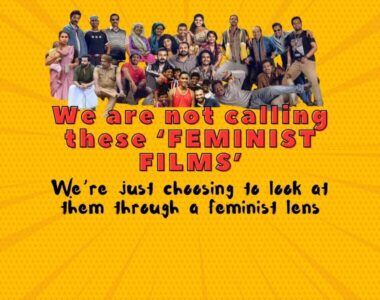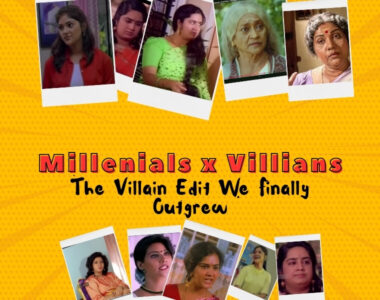

Same Story, Different Society
Gender Politics in Malayalam Remakes vs Hollywood Originals
Malayalam cinema, often referred to as Mollywood, has a long history of adapting global stories. While many remakes retain the core plot, they frequently reshape character dynamics—especially gender roles—to align with local cultural expectations. This shift is most visible when comparing films like The Proposal and My Boss or Rain Man and Alexander the Great.
The Boss Woman Contrast
Original: The Proposal (2009)


The Lead: Sandra Bullock plays a high-powered, cold, and bossy editor in New York.
The Vibe: She is independent and successful. When she goes to Alaska with her assistant (Ryan Reynolds), she remains a strong character. The comedy comes from her being a “fish out of water,” but she doesn’t “apologize” for being a career woman.
To make Dileep the “Hero” and Mamta Mohandas the “Heroine” for a Kerala audience, the director added some very specific regressive layers:
In The Proposal, the boss stays a boss. In My Boss, there is a heavy emphasis on Mamta’s character (Priya) learning “family values.” She is shown as someone who lacks culture as she grew up abroad, and the movie suggests she needs a Malayali man to tame her and teach her how to be a proper woman. In the original, Ryan Reynolds is also an assistant who is clearly lower in the corporate ladder. Yet in the Malayalam version, Dileep’s character (Manu) is given more mass and cleverness. He isn’t just an assistant; he’s a brainy guy who constantly tricks her. The additional touch is making the man look smarter than his female boss to satisfy the male ego of the audience. There is often a lecture involved where the hero (or his family) tells the woman that “career isn’t everything” and “family is what matters for a woman. This moralizing wasn’t in the Hollywood version it was added purely for the Malayali family audience.
Additionally, I felt Priya was stronger than Margeret because Mamata bought in sharp energy into her character, that made her dominant. Yet the filmmakers had to ruin it to satisfy us.
The Tone Transformation
Original: French Kiss (1995)


In French Kiss, Kate (Meg Ryan) is treated as a woman on an emotional journey. Luc (the male lead) might find her annoying, but he doesn’t strip her of her dignity. In Vettam, however, it is “normalized” to treat Veena as a joke. Calling her “Theepattikkolli” (Matchstick) isn’t just a nickname; it’s a way to body-shame her and reduce her to a caricature. It sets a tone that the hero doesn’t need to respect her because she is flawed or crazy.
In the original Hollywood film, the male lead would never dream of hitting the woman to calm her down.
By having Gopalakrishnan (Dileep) slap Veena, the director is using a regressive trope where a man’s violence is rebranded as authority or care. In Kerala cinema of that era, a slap was often used to show that the hero has taken charge of the woman. It frames her emotions as hysteria that only a man’s physical correction can fix. In the Hollywood version, the resolution is about two people choosing each other. In Vettam, the dialogue where Gopalakrishnan tells Felix not to leave her when the money runs out and that he will take her back is incredibly problematic. It treats Veena like a commodity or a used object that can be passed between men. It also implies she has no agency to decide her own life; she is just waiting for a man to claim or re-claim her.
Additional point:
Directors often feel that to satisfy a traditional audience, the hero must be Alpha. In their eyes, a hero who just talks to a woman to calm her down isn’t manly enough. They add the slap and the name-calling to make the hero feel superior to the woman, which is a good instance they intentionally leave out because they fear the audience will think the hero is weak.
The Forgiveness Expectation
Original: Butterfly on a wheel (2007)

It is a classic example of a Mollywood remake that starts with a brilliant, progressive engine but intentionally pulls the handbrake to stay within the lane of traditional gender roles. the film actually makes Parvathy smarter and more capable than her Hollywood counterpart (played by Maria Bello). Samvrutha Sunil’s performance gives the character a chilling, calculated edge that makes the reveal incredibly satisfying.
However, the “additional touch” added for the Malayali audience is her sudden regression. By making her forgive Ravi, the director effectively says that no matter how brilliant or killer a woman’s mind is, her ultimate social value must still lie in her capacity to endure a man’s mistakes.
The final question is the most disturbing part of the film’s sexist touch. When Parvathy asks Ravi, “Would you forgive me if I was in the same position?” his silence is loud.
By leaving this unanswered, the movie reinforces the patriarchal double standard: a woman is expected to be a Devi who forgives, but a man is allowed to be a judge who would likely never accept a cheating wife.
This silence satisfies the conservative audience’s ego by not forcing the hero to admit his hypocrisy. What this movie lacked is JUSTICE. While Butterfly on a Wheel end with the woman reclaiming her agency by leaving, Cocktail traps her back in the marriage.
It suggests that even the most brilliant woman is expected to prioritize her husband’s presence over her own dignity a conclusion that denies her the justice she truly deserved.
The “New Gen” Irony
Original: Forgetting Sara Marshall (2008)

While Forgetting Sarah Marshall is a film about emotional growth and moving on, Nee Ko Njaa Cha uses the same “boys’ trip” template to launch a full-scale attack on independent women.
In the Hollywood original, the “consequence” of the breakup is just a broken heart. In Nee Ko Njaa Cha, the director adds a toxic moral consequence that was never there. By introducing the fear of AIDS, the movie effectively tells the audience: “This is what happens when you interact with ‘modern’ women.” It turns a medical condition into a “divine punishment” for both the boys’ lifestyle and the girls’ perceived “promiscuity. The Original: Forgetting Sarah Marshall treats the “Ex” (Sarah) with complexity. By the end, you realize she wasn’t a “bad” person; she was just in the wrong relationship.
Whereas in Nee Ko Njaa Cha, the women are stripped of any humanity. They are portrayed as degraded, manipulative, and trash. The film encourages the audience to disrespect them. The mollywood remake is pure misogyny using the screen to vent frustration against women who exercise their own choice or agency.
The most ironic part is that the movie markets itself as “New Gen” (cool, urban, and modern). Yet, it is deeply regressive. It celebrates the boys’ “cool” lifestyle of drinking and partying, but punishes the women for doing the exact same thing. This “double-standard” is a classic Malayalam director’s cover-up: they show “cool” things to get the youth into the theater, then add “shaming” scenes to satisfy the conservative moral police.
The Genius Over Humanity Shift
Original: Rain Man (1988)


It is a grounded, quiet story about a man (Tom Cruise) learning to love and respect his autistic brother (Dustin Hoffman).
The Hero’s Journey: The “strength” of the movie is in the brother’s vulnerability. Raymond (the autistic character) isn’t a “hero”; he’s a human being with a condition who needs support and understanding.
In the Mollywood version (the copy)
To satisfy the “Superstar” image of Mohanlal and the expectations of a “macho” audience, the director added a twist that felt incredibly degrading to the theme of disability. The God-Like Cover-up: Instead of keeping Alexander as a person with a disability who needs care, the movie reveals he is a Genius in Disguise. He is portrayed as someone who is above everyone else a master manipulator who was essentially playing a game.
The women in the movie are treated as accessories or intellectual inferiors. Because the hero is turned into this “Alexander the Great” (a conqueror of minds), the female characters are sidelined as people who just don’t get it. The movie replaces the original’s theme of empathy with a theme of dominance.
By making the character fake his vulnerability or use his genius to outsmart everyone, the film suggests that for a male lead to be great, he cannot be weak or in need of help. He must always be the King/head of the situation.
I am a huge fan of these movies for their humor and craft, but I am deeply disappointed by the ‘additional touches’ Mollywood felt necessary to add. Why can’t a woman just be a woman strong, flawed, and independent; without being ‘corrected’ or ‘tamed’ for the malayali audience? Why must her strength be seen as a problem to be solved? It feels like the answer to this question is just like Ravi’s silence in Cocktail another deafening refusal to acknowledge that a woman deserves the same respect and agency as the man standing next to her.
When stories travel across cultures, they inevitably change. But when those changes consistently silence women, glorify male dominance, and reward submission, it raises a deeper question—not about cinema, but about society itself.
If storytelling reflects who we are, then what do these changes say about us?
Now it’s Your turn—
Which remake do you think changed too much?
And did it make the story better… or worse?