Disclaimer: Written from the writer’s personal world of thought,
these views stand as their own and may or may not reflect ours.
THE ONES WHO CHANGED
Malayalam Cinema's Evolved Men
In Malayalam cinema, characters like Das in Bangalore Days are powerful examples of “unlearning” patriarchy. Das starts as a controlling, emotionally distant husband who expects his wife to “adjust”. His transformation happens when he stops trying to be the “perfect, in-control provider” and begins to respect Divya’s individuality and her role in healing his past.
Initially, Bobby (Kumbalangi Nights) is a drifter with some “naadan” prejudices (like making fun of a friend’s fiancé’s appearance). His relationship with Babymol. She doesn’t just “love” him; she holds him accountable and helps him find dignity in work (fishing). He transforms from a purposeless man into someone who respects a woman’s agency and builds an equal relationship.
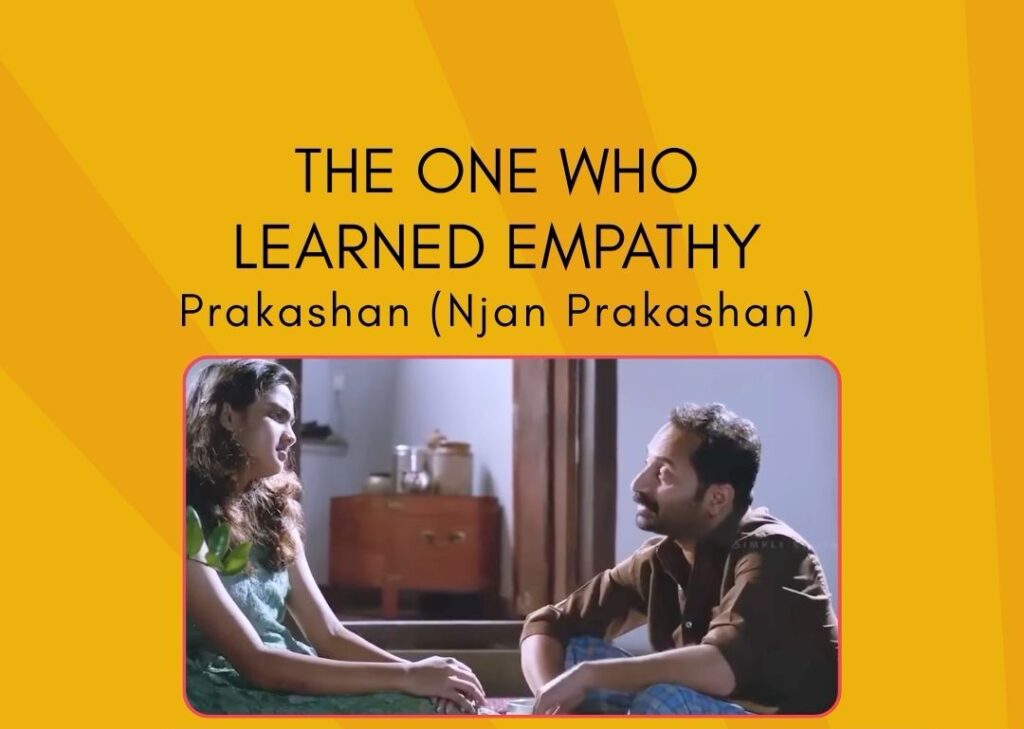
Prakashan (njan Prakashan) is a sexist, lazy, and manipulative man who tries to “use” women to go abroad. Meeting Salomi and later taking care of a young girl named Teena. He unlearns his “I am the hero” ego and learns the value of empathy and hard work, eventually becoming a nurse—a profession he previously looked down upon.
Siddharth (Kali) is a man consumed by toxic rage and a need for control, which constantly puts his wife, Anjali (Sai Pallavi), in danger and emotional distress. A life-threatening night where his anger nearly costs them everything. While the movie is a thriller, it highlights the consequences of male rage and shows the beginning of a man realizing that his “masculinity” is a threat to the people he loves.
While not “controlling” in a villainous way, Faizi (Ustad Hotel) starts with a very self-centered, “urban-cool” ambition that ignores his roots and his grandfather’s values.
His grandfather and Shahana play a big part in his transformation.
He transforms from a boy chasing a “status” career to a man who understands that his skill (cooking) is about service and feeding the soul, not just his own ego.
Majeed in Sudani from Nigeria starts as a frustrated local football manager with a strained relationship with his mother and stepfather. Caring for an injured foreign player and seeing the selfless love of the “ummas” (mothers) in his house. He sheds his bitterness and learns to be a caring, emotionally present man, realizing that the women in his life are the real pillars of strength.