

Well, as someone coming from wealthier, city-based and more modern background they will be portrayed or converted as the “breaker of homes’’.
My Alternative Shared Table Approach:
If the household had functioned as a cooperative rather than a monarchy, the story would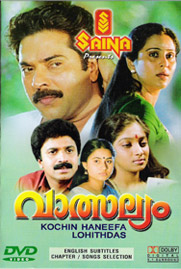 have changed entirely: If the brothers and their wives contributed financially and domestically. Raghavan wouldn’t be a beast of burden. The hardships the movie uses to justify his authority would disappear. If shoba’s choice to live separately was respected, it would acknowledge that a woman’s life doesn’t belong to anyone. It would move the family from Duty based to Consent based. How would this have affected the Malayali audience (Kerala would transition from joint families to nuclear families. Audiences were terrified of chang. People liked feeling bad for Raghavan the idea that suffering for your family is the highest virtue for a man.
Thalaynamanthram specifically Home-Breaker trope. It was marketed as a cautionary tale about greed, deep patriarchy and how it assigns guilt. Also called as Status Quo Patriarchy.

Kanchana (The evil character as per the movie) was not evil. She was a woman with unfulfilled aspirations trapped in a system that suffocated them. The film functions on the idea that the Joint Family is Sacred and the Patriarch (the elder brother/husband) is Always Right. The very title suggests that a woman’s influence over her husband is sneaky or manipulative. It implies if a man starts thinking for himself or his own wife/children, he has been poisoned by a woman’s whispers.
The movie contrasts Kanchana with her sister-in-law who is the perfect patriarchal woman: silent, content with poverty, and completely submissive. By making the submissive woman the heroine, the movie tells all Malayali women: To not ask for more.
Kanchana wanted a house of her own, a better standard of living, and a social status that matched her husband’s job. In any modern society, these are standard middle-class goals. Her biggest “crime” was comparing her life to others and wanting more. While her methods (lying about their wealth) were wrong, her desire for progress wasn’t evil—it was human.
Because she had no career or financial power of her own, the only way she could improve her life was by pushing her husband. The patriarchy denied her a path to success, then punished her for trying to find a side door.
Underlying Issues of the Movie: The husband was weak and lacked courage to be honest with his wife or his family. Instead of building a life with her, he let the conflict aggravate. The house was overcrowded and lacked privacy. The movie ignores the fact that young couple needs their own space. It frames their departure as a betrayal rather than a natural step in a marriage. The most patriarchal moment is the ending where Kanchana is humiliated and has to learn a lesson by suffering in a low-income colony. Her return back to the joint family surrendering her dreams and her voice
My alternative shared approach: If they sat together as a team and planned their future; they could have moved out without drama.Instead of vilifying the move, the family could have supported them. If Kanchana had been encouraged to work or use her energy for a job, she wouldn’t have spent her time obsessing over social status.
 Aniyathipravu (Classic example of Conservative romanticized patriarchy) Ideal women in the 90s as she was obedient.
The movie already means gold plated cage, where the character Mini who is a Rajakumari of the household, over-loved by the brothers and her family. By calling her a princess the brothers place her on a pedestal. While this looks like respect, it strips her of her humanity. A princess on a pedestal cannot move, cannot make mistakes, and certainly cannot have a desire that contradicts the honor of the palace. Her silence and naivety are not personality traits they are just survival mechanisms. The villainous threats from her brothers prove that their love is conditional. It only exists as long as she remains the ideal sisters. The moment she acts as an individual, the love reveals its true face: Totalitarian Control. A life without the power to choose is not a life lived, it is a life managed by others: THIS IS THE CHARACTER OF MINI. Love is healthy when it respects boundaries. In Aniyathipravu the brothers confuse protecting her with possessing her. The movie’s climax when the lovers decided to part ways to please their families is framed as noble sacrifice. But unmasked as psychological defeat. It tells the audience that the family ego is more important than the individuals soul.
MY ALTERNATIVE SHARED APPROACH: Instead of being the silent observer of her own life, Mini should have confronted her brothers. Their love would be tested, if they truly loved her, they would have supported her happiness even if it challenged their traditional views of honor. The tension would have come from emotional growth, not from the fear od physical or socil violence.
Cause what is the point of living if your choices are restricted? The answer to my question is answered but this way as in ‘The point of living is to uphold family honor.’ Well to me it is the true point of living is autonomy.

The movie wraps patriarchy in political satire. While we laugh at Mamachan’s antics the movie displays how a man can manipulate an entire social and familial structure to claim woman. This is a more modern, cunning version of traditional patriarchy system. It doesn’t use the raw anger of Hilter or tears of Vatsalyam. The key elements used in this movie is: power, status, manipulation.
The most patriarchal element is Mamachan’s pursuit of Lisa. He liked her mother first, and then decides to marry the daughter. This treats women not as individuals with their own histories, but as objects of male desire that can be swapped or won through political direction. Mamachan uses his “intelligence” and social standing to keep Lisa and her family in the dark. In this system, the man holds all the information, and the woman is just a piece on his chessboard. Because the movie is a comedy, Mamachan’s lies are framed as cleverness. However, unmasked, it shows a man who believes he has the right to orchestrate a woman’s entire life including her marriage without her having a clue about his real motives.
MY ALTERNATIVE SHARED APPROACH: In the movie, Lisa is mainly a bystander to mamachan’s schemes. An alternative ending could have been if she was aware of his past romantic feelings towards her mom and his political lies before the climax. Instead of focusing on tricking the family into marriage, lthe focus should have been on lisa whether she wanted a man like him or was she a victim of well executed plan? The movie however treats the mother’s past as a joke. A non-patriarchal version would respect the mother’s dignity and the awkwardness of the situation, rather than making it a stepping stone for the hero to get the daughter.
Life is about making decisions for youself. In the movie, mamachan decides Lisa’s future. To me lisa should have known the truth, if she still chooses him that’s her choice. Well, if she doesn’t, she isn’t a spoilsport she is an individual exercising her right to say no. A RELATIONSHIP is built on a lack of transparency not another form of control.

The film tries to paint Sathyanarayanan who is a lovable liar who uses talent for good cause to built his relationship with Anjali is a psychological manipulation. The man believes his intellectual superiority gives him the right to manufacture a reality for the woman. He doesn’t just control her movements; he controls her perception of truth. The movies frames Sathyans’ lying as a gift. However, in reality it is a tool of dominance. He creates a fake personality to win her over, which is actually a fraudulent consent. Throughout the movie Anjali is treated as an “ultimate prize’’ for his successful lying. Her feelings, trust, and her right to know the truth are secondary to his mission to get her back. The disturbing way he gets her back, involves putting her at emotional turmoil, only to rescue her from the very confusion he created. Classic example of “Break the woman down so she feels the need of a man to fix her”.
 Well, my ALTERNATIVE SHARED APPROACH: Again, what’s the point of living when you are unable to make decisions. Anjali isn’t making a decision at all; she is being steered. An alternative way is exposing the manipulator, treat his lies as not a joke. Instead of typical forgiving smile, a non-patriarchal ending would show Anjali walking away because she should know a man who lies about the small things will lie about the big things too. The movie treats Anjali as someone easily fooled. An unmasked version would respect her as an educated, professional woman who values integrity over cleverness.
A relationship built on lies is not a romance; it’s a hostage situation where the victim doesn’t know they are being held.
 Guruvayoor Ambalanadayil (Most recent movie which uses Regressive Bro-code patriarchy)
The movie has been marketed as a chaotic comedy, it is arguably of the recent patriarchy movies. In this system, the most important relationship in the world is between two men. The women (sisters and wives) are simply the currency or the territory through which these men bond, fight, or seek revenge.
The entire plot is about Vinu and Anandan reacting to each other. The woman, the sister, the fiancé are barely consulted, They are just side effects of the men’s ego clashes. Just like aniyathipravu the brothers love for his sister is actually about his pride. If she marries the wrong guy, it is an insult to him, not a tragedy for her. The movie tries to make the controlling brother trope funny again, but it shows that even in 2024, a woman’s wedding in cinema is often treated as a deal between the men in her life.
My alternative shared approach is that:
 Instead of the men running around hiding secrets and making deals over who marries whom, the women (Anjali and Parvathy) should have been the primary decision-makers. The Bro-Code is the ultimate patriarchal shield. An alternative would be a story where the men realize that their honor doesn’t give them the right to mess with woman’s wediing day.
Even though the cinematography and music have improved, many filmmakers still believ that the over-potective hero and the manipulative hero are the most relatable characters for a family audience. They use humor to hide the fact that woman has no voice. Men handle the problems; women handle the emotions (and the consequences) is the message of the movie